St. Croix, U.S. Virgin Islands
St. Croix is the largest of the three United States Virgin Islands. The island’s 28 miles long and has a rain forest at one end and cactus growing at the other. The drier, east end, is also the easternmost point in the United States.
St. Croix was discovered by Christopher Columbus in 1493 when his crew anchored off of Salt River (an excellent dive site by the way) and got a less than friendly reception from the cannibalistic Carib Indians. We promise a much better reception for you.
Let’s see, there were the Spanish, then English, Dutch, French, and Knights of Malta, before the Danish West Indies Company purchased the island and built the town of Christiansted in 1735 and Frederiksted in 1751. The island was primarily agricultural then with up to 241 sugar cane plantations. The estate names are still used which can lead to a little confusion as you try to find places like “Work and Rest”, “All for the Better”, and my favorite, “Estate Slob”. In 1917 the U.S. purchased the Virgin Islands and we’ve been under the U.S. stars and stripes since.
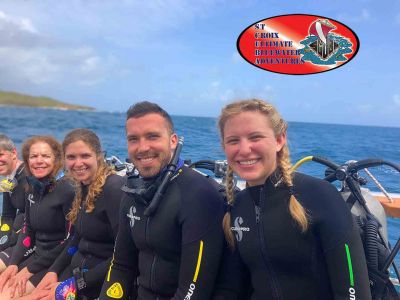
Visitors to St. Croix are impressed that the people are so friendly, and there’s good duty free shopping ($1200 duty free including 6 fifths of alcohol if one is locally produced like Cruzan Rum or Captain Morgan rum), and beaches that are beautiful, and the snorkeling/diving is excellent.
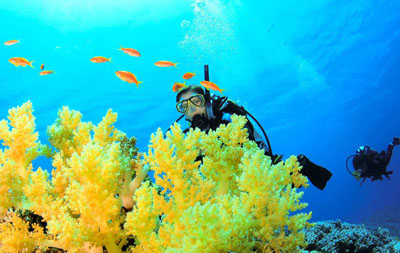
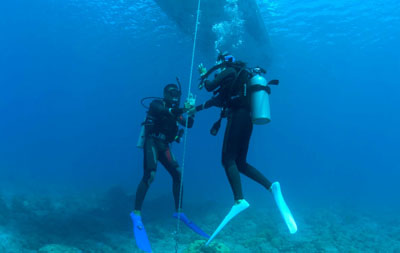
In fact this is one of the most underrated dive destinations in the world. (We have to be a little self serving)
St. Croix has:
- The largest living reef of any Caribbean island
- A wall that drops 13,200 feet!
- 5 Shipwrecks within 100 yards of each other
- The famous Frederiksted Pier, awesome by day and absolutely fantastic at night.
There’s also three golf courses including a world class Robert Trent Jones course.
From a cultural view, there’s a lot of things to do including:
- Whim Plantation museum ( a restored Danish sugar cane plantation)
- St. George’s Village Botanical Gardens
- Two Danish forts
- The Caribbean Dance Company (West Indian and Afro-Caribbean culture in exciting choreography)
- A couple of 1700′s era churches
- Much 18th century Danish architecture
- Old sugar mills
- And a lot more……..
Some however feel that the best cultural attraction is right in the middle of the rain forest in the Jungle Bar (Montpellier Domino Club) where the famous beer drinking pig (now partaking of non-alcoholic beer only) entertains anyone who’ll buy him a round.
A couple of the beach hotels have West Indians nights where guests can see Mocko Jumbies (stilt dancers), broken bottle dancers, and listen to steel pan bands while feasting on West Indian buffets.
Watersports include, of course, scuba diving, snorkeling, wind surfing , jet skies, kayaks, parasail, sailing, and of course the famous Buck Island National Park with its underwater snorkel trail and beautiful white sand beach.
If just sitting back and catching some rays is your idea of relaxing there’s miles and miles of beaches, some completly secluded and others with great beach bars and restaurants.
Getting to St. Croix is easy with twice daily non-stop service on American from Miami and twice daily American Eagle flights from San Juan. In season Delta flies up to 5 flights a week from Atlanta to St. Croix and USAir has seasonal Saturday service from Charlotte. Beginning this winter (2011) Jet Blue will begin jet service from San Juan connecting to their every increasing number of flights from Puerto Rico to the states.
It’s paradise under the U.S. Flag. Come see us soon and let us show you why we love it so much!